Best SMS Marketing Software for Growing Businesses
Compare the best SMS marketing software on pricing, automation, and A2P 10DLC compliance, and see which one fits your business before you commit.

KEY TAKEAWAYS
- Textedly is the best overall pick for growing businesses, with every feature included on every plan and a free registered number with the fee covered.
- Pricing models vary widely: Textedly, SimpleTexting, and SlickText use flat credit tiers with full-feature access, while Attentive and Podium require a custom sales quote.
- Carrier compliance isn’t optional. An unregistered number can be flagged or blocked mid-campaign, so A2P 10DLC or toll-free verification support should be factored into the decision-making process.
- The right platform should fit your business today and still hold up once your message volume and subscriber list grow.
Americans exchanged nearly 2.2 trillion SMS and MMS text messages in 2024, according to CTIA’s 2025 Annual Survey. Texting is a part of daily life for most people. But while a single text costs less than three cents to send, the wrong SMS platform behind it can cost a growing business thousands in missed replies and blocked campaigns.
You’ll see the same “easy setup, fast growth, simple pricing” promise from almost every SMS marketing platform. What’s harder to tell up front is whether that rate holds steady once you’re sending at volume and whether the features you need are locked behind a higher tier. The idea extends to carrier compliance, since not every provider handles it for you.
The best SMS marketing software suits your company’s needs and holds up even after you’ve sent your first few thousand messages. Here’s how to choose the right SMS marketing software for your business, and how the top 10 platforms compare.
The Best SMS Marketing Software, Compared
Textedly, SimpleTexting, and SlickText share the advantage of offering every feature on every plan. Because there’s no second price tag waiting at a higher tier as a business grows, you can scale without worrying about hitting a feature wall.
Attentive earns its place for a different reason. It’s one of the most comprehensive platforms for ecommerce brands running SMS and AI-driven segmentation at enterprise scale. But every platform comes with its own perks and its tradeoffs.
Here's how 10 of these platforms stack up based on their pricing, feature access, and compliance support.
1. Textedly
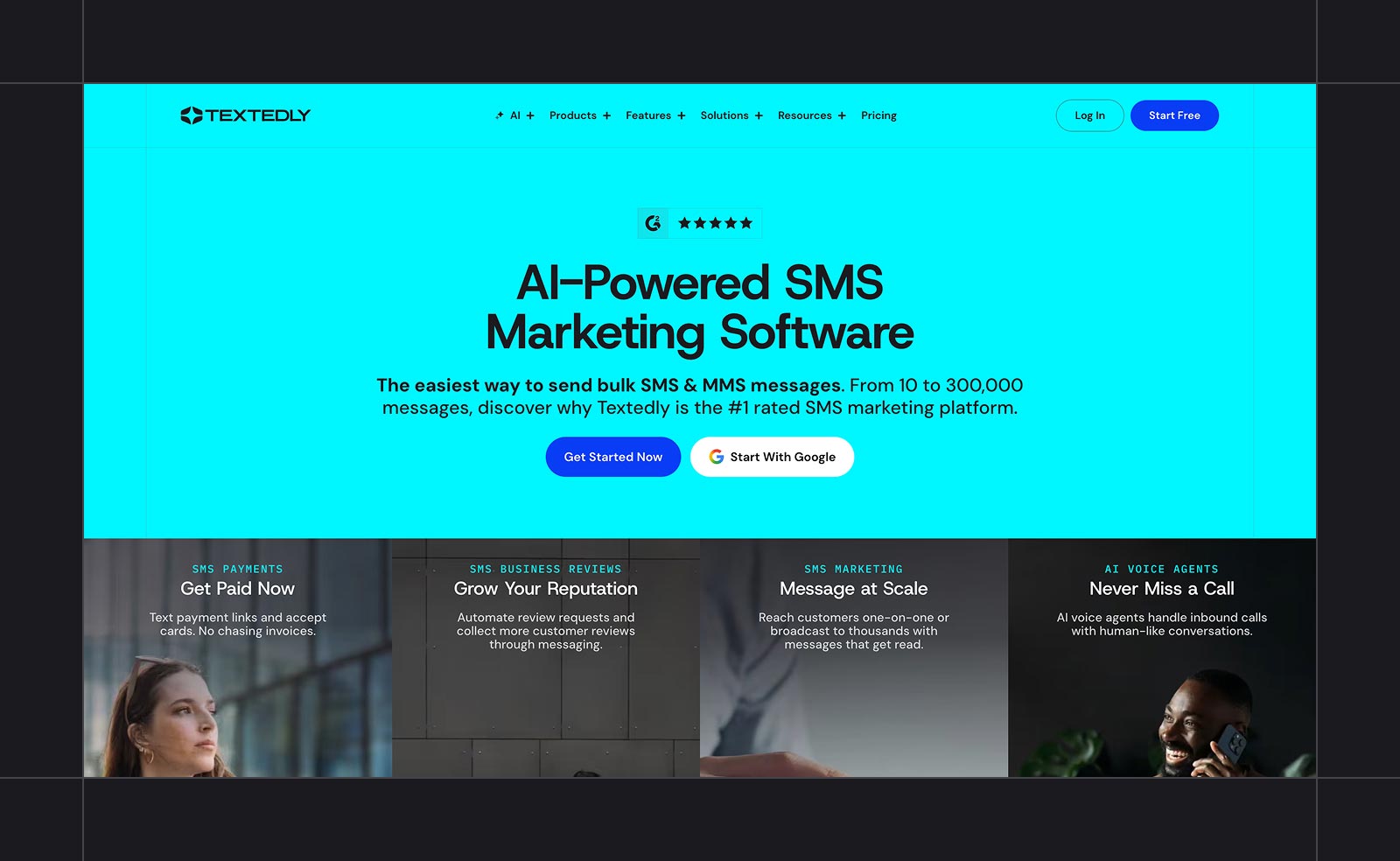
Best for: Growing businesses that want an all-in-one, AI-powered SMS platform
Textedly is an AI-powered customer engagement and SMS marketing platform. Built to support a growing business on both sides of the conversation, the tool lets you automate everything from sending campaigns to handling customer replies.
You get access to mass texting, conversational AI agents, contact enrichment, and SMS payments in one platform, so you’re not patching together separate tools as your text marketing program grows.
That full-platform approach shows up most clearly in two areas that other platforms typically treat as your problem: carrier approval and after-hours coverage.
A2P 10DLC, the carrier registration required before you can send texts from a local number, is a common reason new campaigns get rejected or delayed. The platform includes a free toll-free number and a free 10DLC number on every plan, with the registration fee for your first 10DLC number covered. You can launch your first campaign without a registration fee to pay or a number stuck waiting on approval.
Textedly also helps with after-hours coverage through automated processes. A small team can’t staff someone to catch every call and text that comes in, so Textedly’s AI agent does it instead. Plus, the contact enrichment tool can also fill in a name and email from a phone number, turning a bare list of numbers into contacts you can follow up with.
Pros:
- Free toll-free and 10DLC numbers, with the first 10DLC registration fee covered
- AI voice and SMS agents handle inbound and outbound contact without added headcount
- Signal AI fills in contact details from phone numbers alone
Cons:
- Fixed volume tiers
- No native email marketing yet (coming soon)
- Extra team seats cost $10/mo each
Pricing: $29/mo (500 messages) up to $5,520/mo (300,000 messages) across 14 tiers, plus a free trial with 50 messages and no credit card required. Annual billing includes 20% more messages at the same price.
2. Attentive
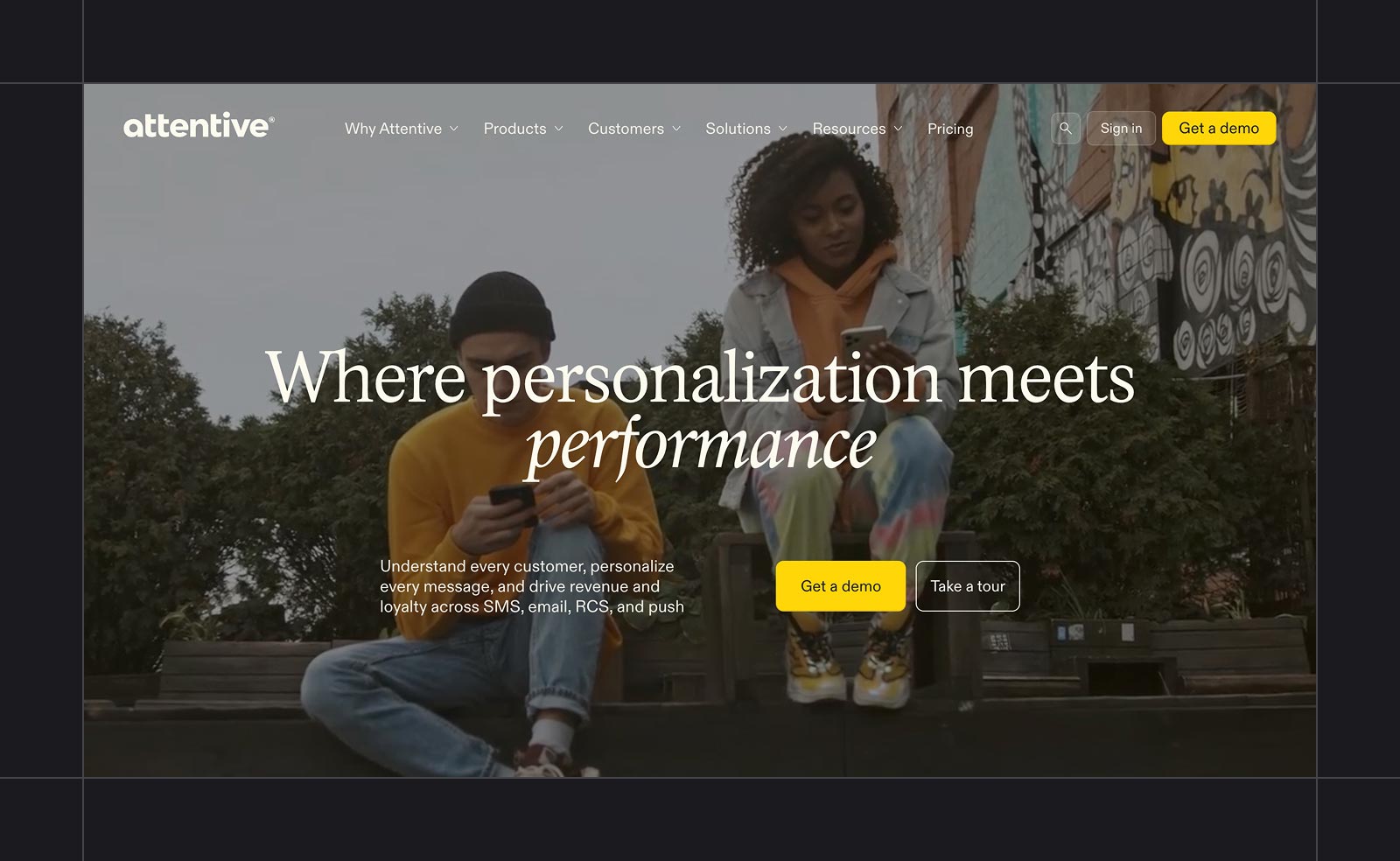
Best for: Ecommerce brands that want a fully managed, enterprise-scale SMS program
Attentive is a conversational commerce platform built for ecommerce brands that treat SMS as a core revenue channel rather than a side channel to email.
Instead of selling fixed self-serve plans, Attentive’s sales team builds a custom quote based on a business’s message volume, subscriber list size, and channel mix. Every account comes with a dedicated support team to launch and scale the program.
This tool is built around getting shoppers to opt in and stay engaged once they do. Its opt-in technology lets a customer join a list in two taps instead of typing out a reply. Pre-built customer journeys and an easy-to-use campaign builder automate what happens next, from a welcome series to an abandoned-cart recovery text.
The tradeoff for that level of automation and support is pricing you can’t see until you talk to sales. Attentive doesn’t publish fixed numbers anywhere, so you won't know the cost of a plan until a sales conversation happens.
A large ecommerce brand that already has a mix of channels and data history makes that sales conversation worthwhile, since there’s complexity for Attentive to quote around.
Pros:
- Attentive Signal ties each phone number to a verified identity across channels
- 150+ pre-built integrations for syncing commerce data
- Dedicated strategic support and onboarding are included on every account
Cons:
- No published pricing; every quote requires a sales conversation first
- Costs scale with list size, message volume, and channel count, so a growing program keeps shifting the bill
- Small businesses with limited budgets may find the pricing model costly
Pricing: Not published. Attentive quotes each account individually based on message volume, subscriber list size, number of channels, and AI products selected. It has usage-based pricing with no credit system.
3. SimpleTexting
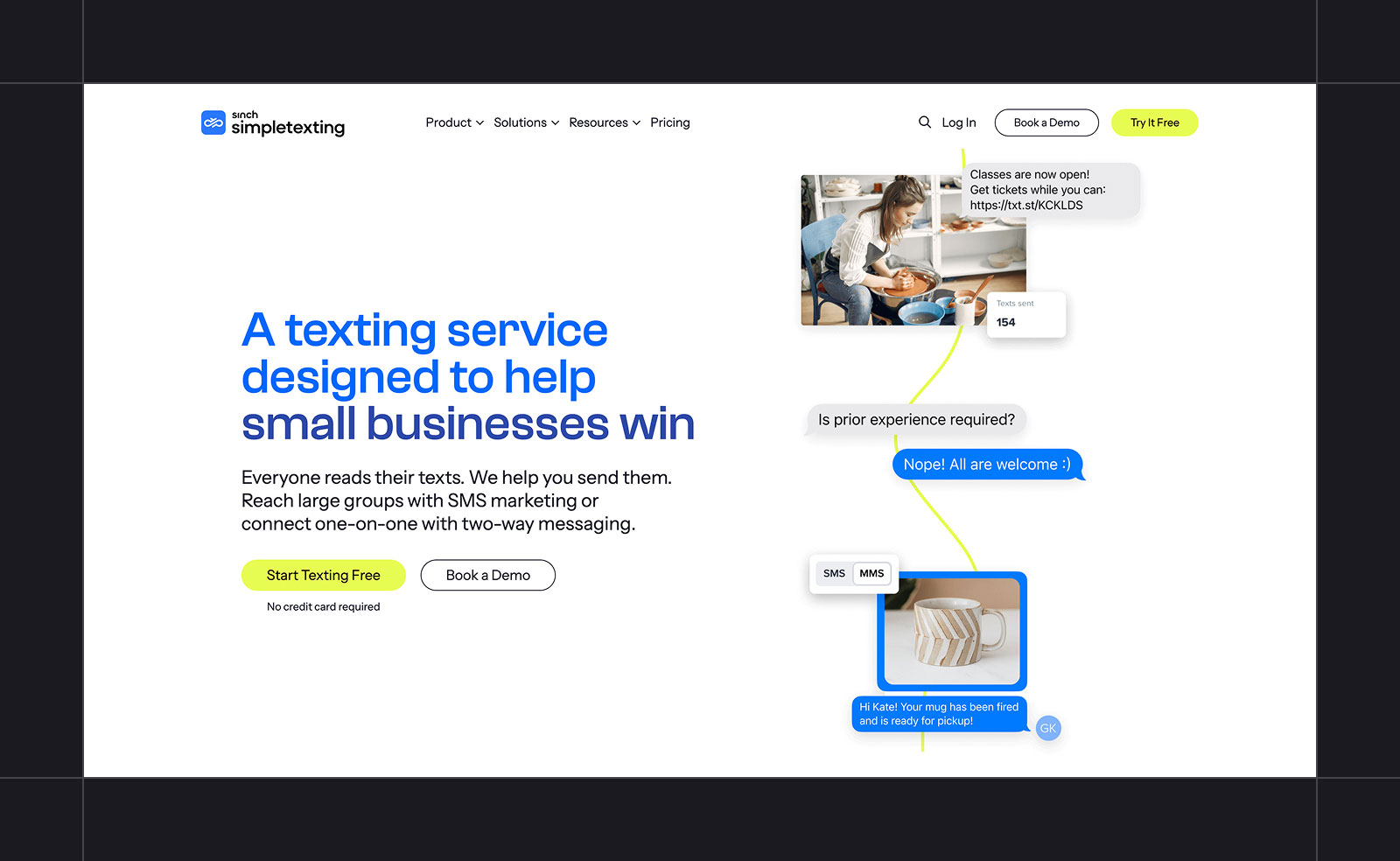
Best for: Businesses unsure how much SMS volume they’ll need
SimpleTexting is a credit-based SMS marketing platform that offers the same toolset across all plans, including mass texting, automation, and reporting. The only difference between tiers is the number of credits a business receives each month. Three team seats come included on every plan, and unused credits roll over to the next month.
What sets SimpleTexting apart is how it takes the guesswork out of choosing a plan. Its pricing page includes a built-in plan-sizing tool that asks about a business’s contacts and sending habits, which recommends a specific credit tier based on the answers. If that recommendation turns out wrong, a 30-day money-back guarantee gives you a way out.
SimpleTexting is also upfront about costs that live outside the plan price. It publishes the exact carrier fee per country, around $0.0025 per message in the US, and states plainly that it never marks that number up.
Pros:
- Built-in plan-sizing tool recommends a tier based on usage
- 30-day money-back guarantee if the plan doesn't fit
- Three team seats are included on every plan, with unused credits rolling over monthly
Cons:
- Local numbers cost an extra $10/mo on top of the plan price
- Dedicated short codes start at $1,000/mo, a steep jump from standard credit pricing
- Overage credits are billed at a higher per-message rate once a plan’s included credits run out
Pricing: $29/mo for 500 credits (includes a toll-free number) up to custom pricing for 50,000+ credits, plus a 20% discount on annual billing and 15% off for nonprofits.
4. SlickText
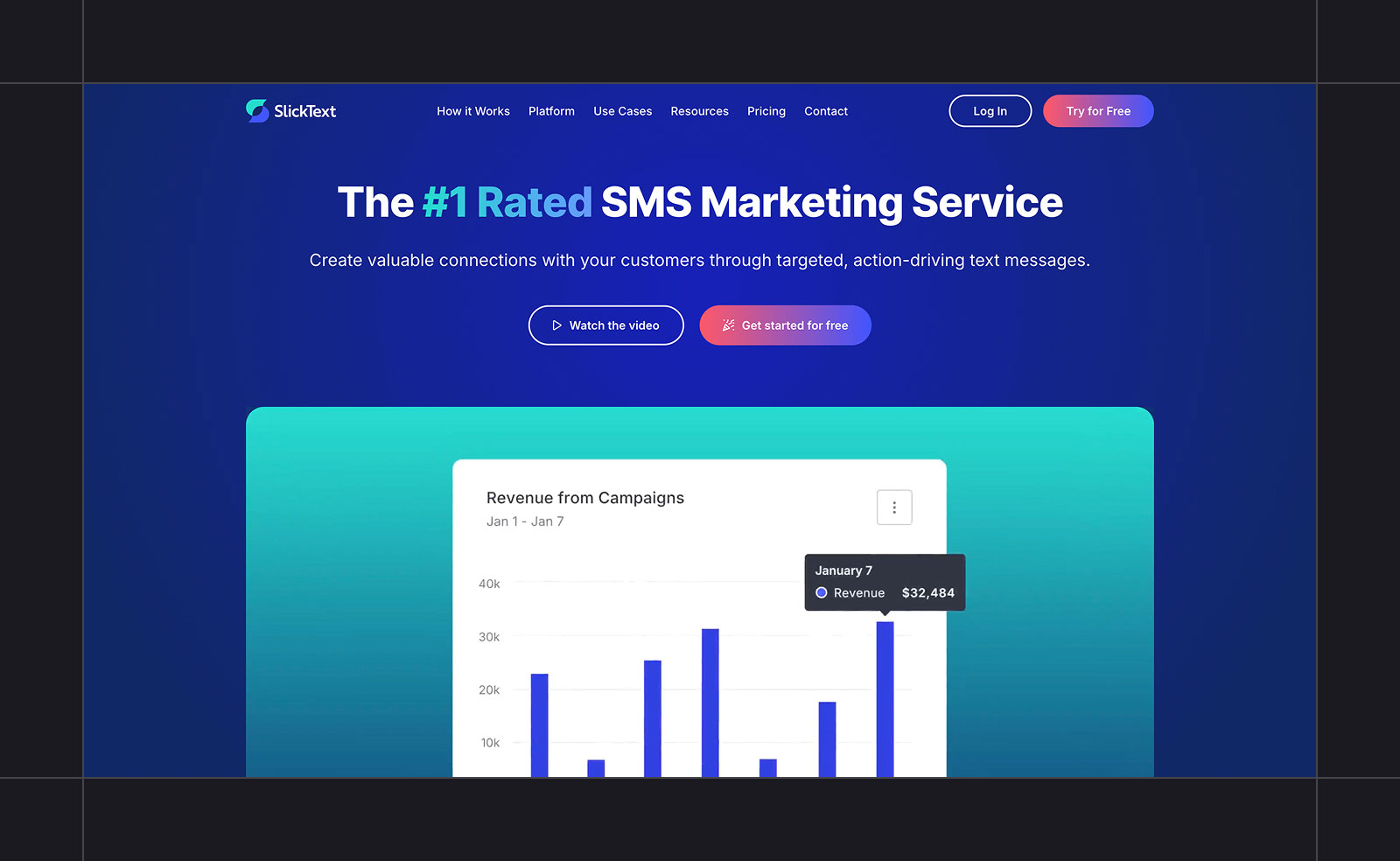
Best for: Businesses that want more guidance as their text marketing program matures
Similar in structure to SimpleTexting, SlickText is also a credit-based text message marketing platform. Every plan gets the same core toolset, and the only thing that changes between tiers is how many message credits are included each month.
Businesses use SlickText for mass campaigns and automated workflows, with built-in pop-ups and sign-up forms to grow their subscriber list.
The platform adds more guidance as an account grows. Once volume reaches a certain size, a free one-on-one onboarding session walks a business through setting up its program with a rep. The highest tier adds a dedicated customer success manager who stays on to help as the program matures further.
SlickText also includes basic RCS messaging, which displays a business’s verified name and branding directly on a customer’s phone to build trust. It’s available as an add-on with a one-time setup fee and an annual maintenance fee.
Pros:
- Free one-on-one onboarding is included starting at the $129/mo plan
- Dedicated customer success manager included at the highest tier
- Basic RCS messaging available for businesses wanting a verified sender name
Cons:
- A dedicated customer success manager isn’t included until the 50,000-credit tier
- RCS requires a $500 one-time setup fee plus $200/year to maintain, for branding only, not the full RCS feature set
- Credit-based pricing still means budgeting around a monthly message cap, not true usage-based billing
Pricing: $29/mo for 500 credits up to $939/mo for 50,000 credits, plus custom Enterprise pricing above that. A free trial is available with no credit card required, and nonprofits get 20% off any standard plan.
5. Klaviyo
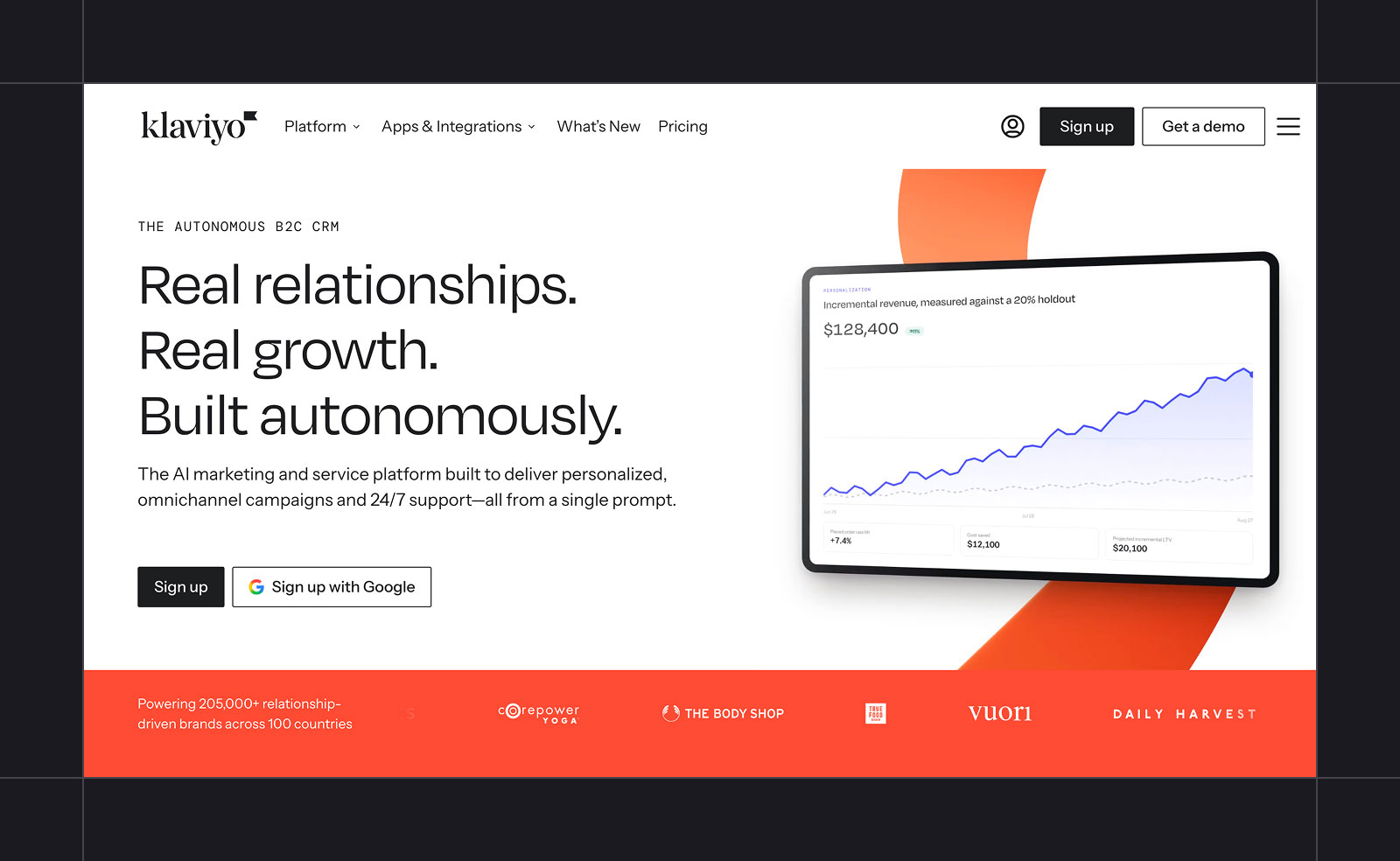
Best for: Ecommerce brands already using Klaviyo for email who want to add SMS without a second tool
A business that already sends emails through Klaviyo doesn’t need a separate tool to start texting customers, too. Klaviyo is an email and SMS marketing platform built for ecommerce, billed by active profile count rather than message volume. A profile counts once, whether that customer receives only emails, only texts, or both. That way, a business isn’t paying twice to reach the same person.
That single-profile structure means that a customer who clicks a product link in an email and then texts a question appears as one person with one history. An automated flow, such as a follow-up, can trigger an email first and a text second to the same person, without a separate SMS platform synced on top of the existing setup.
SMS runs on a separate credit system layered on top of the profile-based plan. A free account comes with 150 SMS and MMS credits to start, and every account can buy more credits as needed. Credits are priced per message based on the destination country rather than a flat domestic rate.
Pros:
- One customer profile covers both email and SMS, so no separate contact lists to sync
- Automated flows can trigger across email and SMS without a second tool
- Free plan includes 150 SMS/MMS credits to test before committing to a paid tier
Cons:
- SMS isn’t included in the Email-only plan; reaching customers by text requires the Email + SMS tier
- SMS credits are billed separately from the base plan, so the total cost isn’t one flat number
- Pricing rises with profile count, regardless of how many of those profiles are actually reached by SMS
Pricing: Free (250 active profiles, 150 SMS/MMS credits) up to $35/mo for 251+ profiles on the Email + SMS plan, with SMS credits purchased separately on top of that base price.
6. EZ Texting
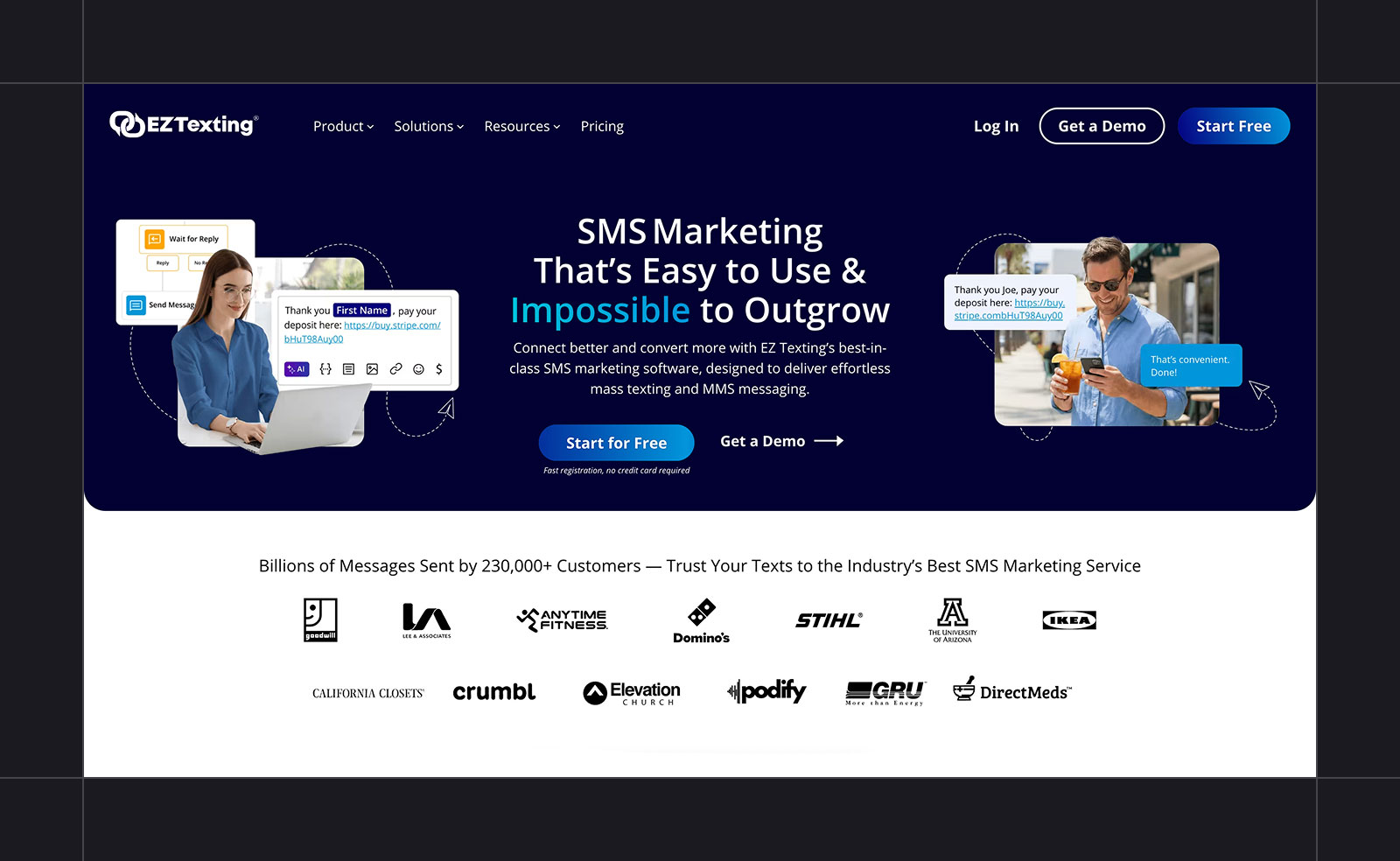
Best for: Businesses that want help writing and translating messages, along with sending them
Staring at a blank message box is a real barrier for many small business owners trying to craft an engaging message. EZ Texting aims to help fix that with AI features.
The AI Compose tool drafts a message from a short prompt, and AI Reply suggests responses to incoming texts. A conversation doesn’t have to stall waiting for someone to type something out with these tools.
Auto-Translate can let a business do even more. Write once and send that message in six languages, including Spanish, French, and Arabic, without hiring a translator or copying text into a separate tool.
Those AI features are part of a credit-based structure, with a flat monthly price tied to a set number of message credits and unlimited contacts and keywords included from the entry plan up.
Pros:
- AI Compose and AI Reply draft messages and responses instead of starting from scratch
- Auto-Translate sends the same message in six languages without a separate translation tool
- Unlimited keywords and contacts included on every plan, including the entry tier
Cons:
- Plans carry an additional telecom fee on top of the advertised monthly price, so the sticker price isn’t the full cost
- The entry plan caps out at 500 credits
- No dedicated after-hours or AI voice support
Pricing: $25/mo (500 credits), scaling up with message volume, plus a 14-day free trial with 120 message credits and no credit card required.
7. Omnisend
Best for: Ecommerce brands that want email, SMS, and push notifications in a free-to-start platform
Omnisend’s free plan includes something most free tiers don’t: a third messaging channel. Alongside email and SMS, every plan, free included, comes with built-in web push notifications, which are browser pop-ups that show up on a customer’s device even when they’re not checking email or texts.
A business can trigger the same automated flow, like an abandoned-cart reminder, across all three channels.
The tool also lets a business owner check in on their account by asking an AI assistant instead of digging through a dashboard. Once connected, a business owner can ask something like “how did last week’s campaign do?” and the AI answers using that business’s account data.
SMS runs differently from email and push. Instead of being bundled into a flat-fee plan, it’s billed per message as a business sends texts.
Pros:
- Web push notifications are included on every plan, including Free, as a built-in third channel
- AI assistant access is included on every Omnisend plan, including Free
- Automated flows can trigger across email, SMS, and push from one dashboard
Cons:
- SMS is billed separately per message rather than bundled into the plan price
- Free plan caps out at 250 contacts, which a growing list will outpace quickly
- Free plan emails and forms carry a “Powered by Omnisend” badge that only comes off on a paid plan
Pricing: Free (250 contacts, 500 emails/month) up to custom Enterprise pricing, with SMS billed separately starting at $0.007/message.
8. Textmagic
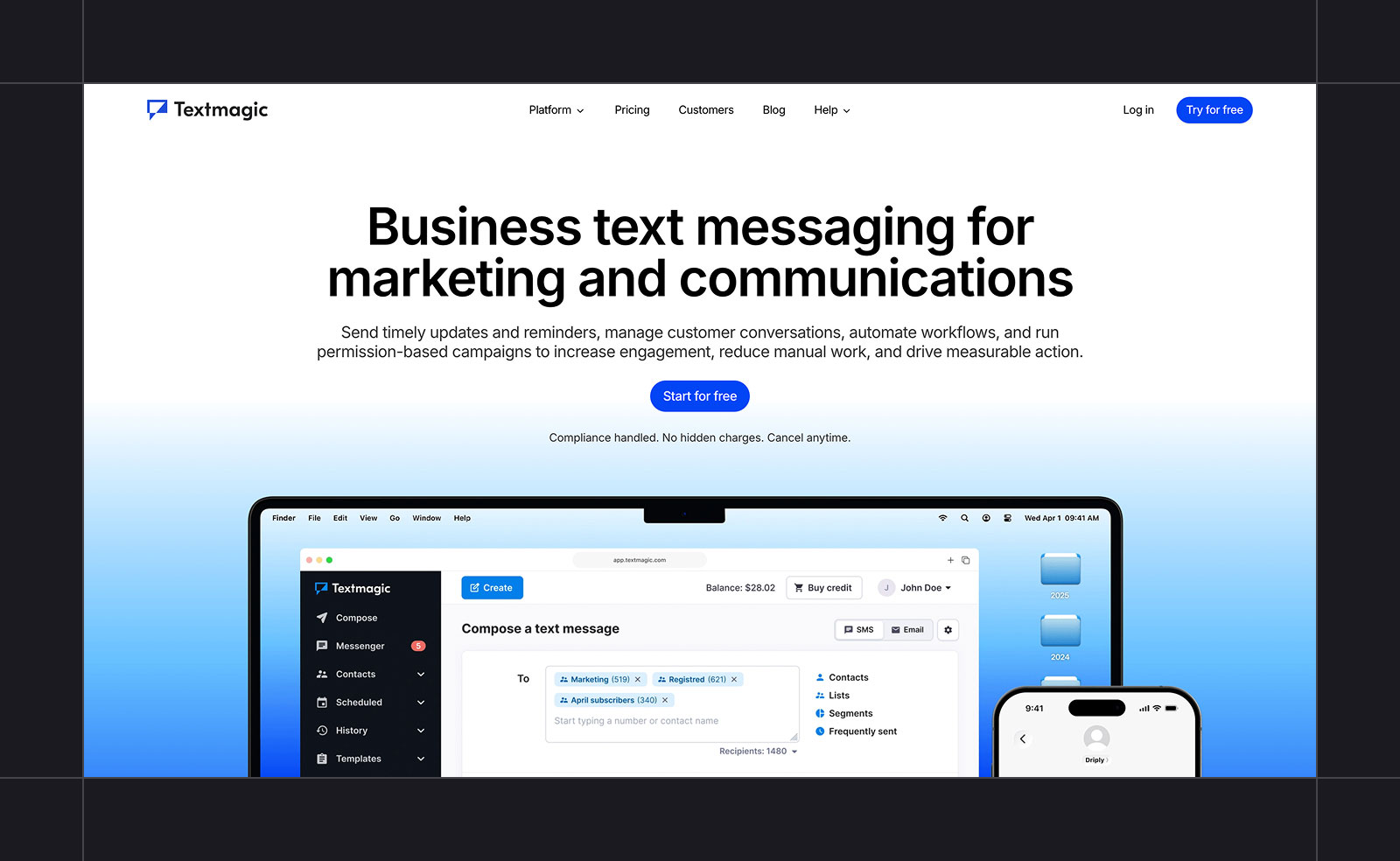
Best for: Businesses with unpredictable text volume who don’t want to commit to a monthly plan
A business that sends a few hundred texts some months and a few thousand in others doesn’t fit neatly into a fixed monthly tier. Textmagic skips the tier structure in favor of bundles with no recurring plan to pick or cancel. A business can buy prepaid credit in a bundle, spend it on texts as needed, and top up again whenever the balance runs low.
That same pay-only-for-what-you-use approach extends past texting. WhatsApp, Facebook, and Instagram conversations, as well as a shared team inbox, are all included at no extra charge. Voice calling is also available on a pay-as-you-go basis. The platform includes unlimited users on every account, regardless of how much credit a business has purchased.
Textmagic also fits into how a business already works. A Zapier connection can link the tool to the software a business already relies on, such as a CRM or a spreadsheet, and lets a business set a rule.
For instance, when something happens in another app, such as a new form submission or a new row added to a spreadsheet, Textmagic can automatically send a text message.
Pros:
- Pay only for the credit a business uses, with no monthly plan
- WhatsApp, Facebook, and Instagram messaging are included at no extra charge
- Zapier connection triggers texts automatically from other apps a business already uses
Cons:
- $0.049 per text is a higher per-message rate than most fixed-tier competitors
- A dedicated number costs $10/mo, plus another $10/mo to maintain 10DLC registration
- No bundled monthly messages means every text brings down the prepaid balance
Pricing: Pay-as-you-go at $0.049/SMS, plus $10/mo for a number and $10/mo for 10DLC campaign registration. Optional monthly subscription plans are available for customers in the U.S., Canada, Australia, and the UK. Pricing for those isn’t published and requires contacting Textmagic directly.
9. Salesmsg
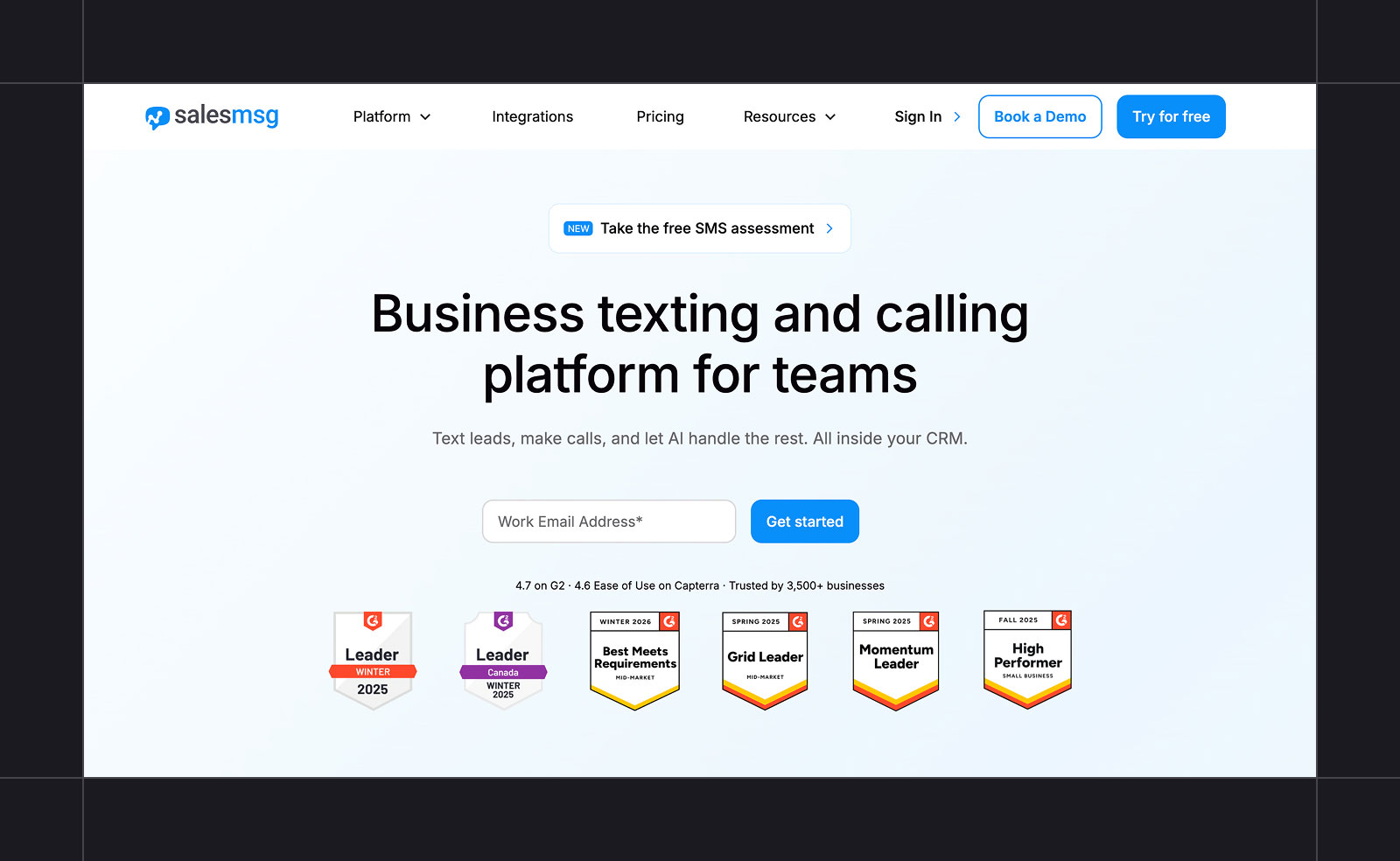
Best for: Sales teams who want texting and calling built into their CRM
Salesmsg is a two-way texting and calling platform built around sales teams. A rep can text or call a lead directly from the CRM, and the conversation automatically logs back to the contact record.
HubSpot and Salesforce get the deepest version of this, with Pipedrive and ActiveCampaign also natively integrated. Beyond those four, more than 1,500 other apps connect through Zapier.
The tool also offers AI agents that can handle inbound conversations before a rep gets involved. A business describes what makes a lead qualified in plain language, and the agent gathers any missing information and either routes a good match to a rep’s inbox or politely ends the conversation if it isn’t a fit.
Calling uses the same credit balance as texting, so a conversation can move from text to call without switching tools or losing history.
Pros:
- Native HubSpot and Salesforce integration logs texts and calls automatically to the CRM record
- AI agents qualify inbound leads automatically, even outside business hours
- Calling and texting share one credit system, so a conversation can move between both without switching platforms
Cons:
- Additional seats cost $10/mo each, and additional numbers cost $5/mo each, so costs climb with team size
- Pipedrive and ActiveCampaign get a lighter version of the native integration than HubSpot and Salesforce, and everything beyond those four runs through Zapier
- Texts with more than 160 characters use additional message credits, so longer messages use up the credit balance faster
Pricing: $25/mo (Basic) up to $277/mo (Pro), plus custom Enterprise pricing. The first seat and number are included free of charge. Additional seats are $10/mo, and additional numbers are $5/mo. A 30-day money-back guarantee applies to all plans.
10. Podium
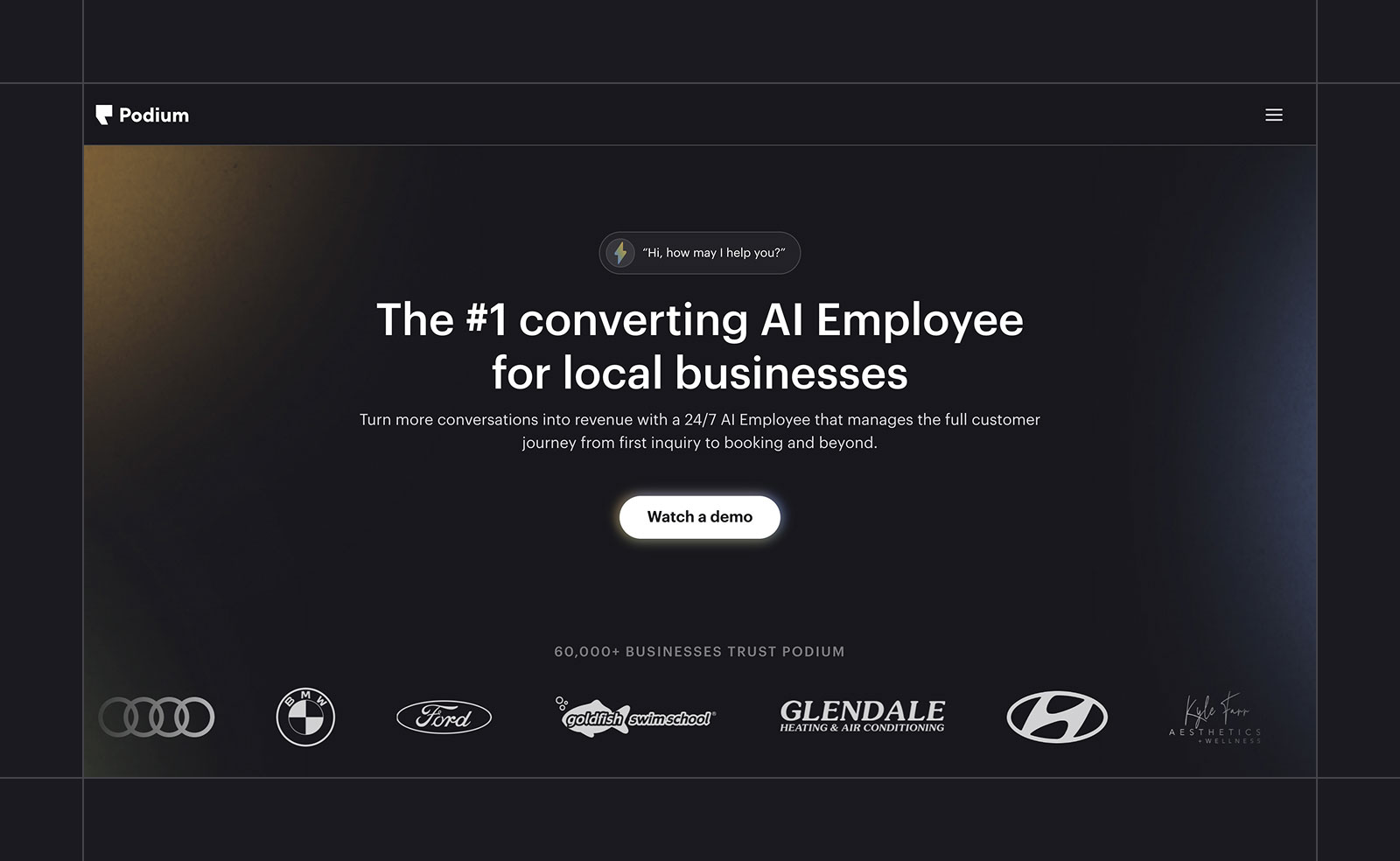
Best for: Multi-location local businesses that want reviews and customer messaging in one place
A customer’s decision to call a business often starts with checking its Google reviews first. Podium is centered around that reality.
The tool pulls reviews from Google and Facebook, as well as text messages and payments, into a single inbox. This means a front-desk employee isn’t switching between four tabs to handle one customer. Podium also helps generate those reviews by texting a customer a review request right after a visit, when the experience is still fresh.
The platform’s dashboard can roll up activity across every location a business runs, whether that’s a multi-site medical practice or a regional franchise. That means a manager can compare review volume or response times by location instead of logging into a separate account for each one.
Pros:
- Consolidates Google and Facebook reviews with text conversations in one inbox
- Can request a review automatically right after a customer visit
- The multi-location dashboard compares performance across every site from one account
Cons:
- No pricing is published anywhere on Podium’s site; every plan requires a sales conversation to get a quote
- AI features are sold as a separate add-on tier rather than included in the base plans
- Requires a 12-month contract that auto-renews unless canceled in writing at least 30 days before the renewal date
Pricing: Not published. Every pricing inquiry is directed to a sales quote form rather than listing plan costs.
How To Choose an SMS Marketing Software
An SMS marketing software should fit your message volume, feature needs, and compliance requirements today. And it should still fit a year from now, once your subscriber list doubles and your campaigns get more complex.
Most businesses choose a platform based on the cost to send a message on day one, only to switch within a year. The switch usually happens because they’ve hit a feature wall, or a carrier flagged a campaign over a compliance issue nobody caught in time.
Ask these questions to determine if a platform can scale with you:
- Does pricing scale with message volume, or does it lock core features behind a higher tier?
- Does the platform handle A2P 10DLC and toll-free registration, or do you have to figure that out on your own?
- Does it support two-way, conversational messaging, including AI agents, or only one-way blasts?
- Is support available when a campaign gets flagged by a carrier?
Out of those questions, two checks matter more than any single feature.
First, look at what features are included at the entry tier. That’s where the difference between marketing copy and reality shows up fastest. Second, find out whether compliance support comes with onboarding or falls on you. Handling A2P 10DLC registration yourself is a reasonable trade for better pricing or features, but it should be a decision you make going in.
Why Carrier Compliance Should Factor Into Your Decision
A platform with every feature a business needs can still fail mid-campaign if its number isn’t registered correctly. AT&T, Verizon, and T-Mobile have tightened enforcement of A2P text messaging rules across the industry. An unregistered or incorrectly registered number gets filtered or blocked outright, no matter how capable the software sending it is.
There are two registration paths for business owners:
- A2P 10DLC, for local numbers, registered through The Campaign Registry (TCR)
- Toll-free verification, for toll-free numbers, reviewed directly by carriers rather than through TCR
Toll-free verification usually moves faster when a business is new, whereas 10DLC registration requires more upfront details. Those details include proof of legal status as a business entity and a clear description of how the texts will be used.
In exchange, a 10DLC number can send more messages per second once approved.
This isn’t a separate project to tackle after picking a platform. A rejected submission can mean weeks of back-and-forth with a carrier before a single message goes out. A platform that builds registration support into onboarding can walk a business through getting it right the first time.
Choose Textedly for SMS Marketing Software Built to Scale
A plan that looks perfect at sign-up can still fall apart the first time a campaign gets flagged or a feature turns out to cost extra. Whichever SMS marketing platform you choose should be able to support your campaigns as they grow.
Textedly removes both of those risks from day one. Every plan includes the full feature set, including AI agents that handle customer replies around the clock, so there’s no feature wall to hit as your business grows. Textedly also includes a free registered number to help with compliance support.
See current pricing and register today to find out if Textedly is right for you.
FAQ About SMS Marketing Software
What is the best SMS marketing software for a small business?
Textedly is the best text messaging service for businesses of all sizes, especially for growing companies. Every plan includes the full feature set and a free registered number, with the fee covered. AI agents also cover customer replies around the clock. That means no feature wall or compliance delay to worry about as your business scales.
How much does SMS marketing software cost?
The cost depends on the SMS marketing software. You’ll generally pay $25 to $39 per month to start, and prices usually scale based on message volume, contacts, or active profiles, depending on the platform. A few platforms, like Attentive and Podium, skip published pricing and instead require a custom quote.
Is SMS marketing worth it for small businesses?
Yes, if your customers already expect fast replies, like appointment reminders or order updates. Text messages get read and replied to far faster than email, which matters most for time-sensitive messages that a small business can’t afford to have sit unread.
What’s the difference between SMS marketing software and a texting app?
A texting app like iMessage or WhatsApp is built for one-to-one personal conversations, while an SMS marketing software is built around business needs. SMS messaging marketing software might include features such as bulk sending, opt-in management, carrier compliance, and reporting on what worked.
Do I need to register for A2P 10DLC to run SMS marketing campaigns?
Yes, you do need to register for A2P 10DLC if you’re sending from a local number. Toll-free numbers go through a separate verification process instead. Either way, an unregistered number risks getting blocked by carriers mid-campaign.
Related resources:
Related Articles

7 Ways to Overcome Lazy Cart Syndrome With SMS Remarketing

11 SMS Marketing KPIs to Measure Campaign Success

Automotive Text Message Marketing Ideas

13 Text Marketing Trends to Watch in 2025


Your Customers Are Waiting
Send your first text in minutes—no contracts, no credit card, no hassle.