The 5 Best Enterprise SMS Solutions in 2027
Enterprise SMS solutions help large teams send and receive text messages at scale. Learn about what to look for in a tool, and explore five options.

KEY TAKEAWAYS
- Textedly is the top pick for teams that want full-feature AI without a development project.
- Every Textedly plan includes AI voice and SMS agents, which Textedly customers report cut customer service costs by up to 70%.
- Twilio, Sinch, Infobip, and Bird are developer-first platforms that fit engineering-led teams, with strengths in custom-built messaging, global deliverability, omnichannel customer journeys, and low per-message costs.
Texting your book club that the meeting moved to Thursday takes about four seconds and zero planning. Texting 300,000 customers that every flight is delayed on Christmas Eve is a different story. Carriers want to know exactly who you are before they’ll deliver anything; every recipient needs a documented opt-in, and if a chunk of those messages gets filtered as spam, the first sign of trouble might be a crowd of confused travelers at the gate.
Enterprise SMS solutions are built to handle more than just unfortunate travel days. They handle the infrastructure behind A2P messaging, including carrier registration, sending throughput, and delivery tracking. This means large organizations can push out alerts, verification codes, reminders, and campaigns at volume without landing on a carrier’s naughty list.
Below are five of the top enterprise SMS solutions, from developer-first APIs to platforms with built-in AI that a marketing team can run without engineering help.
Why Businesses Look for Enterprise SMS Solutions
At most large companies, texting starts small. Customer service sets up a number for order questions, and a regional manager texts customers from a personal phone because it’s faster. A year later, nobody can say how many numbers the company texts from or who collected consent for what.
An enterprise text messaging platform brings everything under one roof. These are the problems most businesses are trying to fix when they start shopping:
- Carrier registration: US carriers block business texts from unregistered 10-digit numbers, and getting approved means verifying your brand, describing each use case, and submitting sample messages and proof of opt-in. A good platform handles 10DLC registration with you, so your first campaign doesn’t stall in a vetting queue.
- AI agents on call 24/7: AI voice and messaging agents answer questions and qualify leads around the clock, then hand off anything that needs a person.
- AI-assisted campaigns: AI drafts message copy, picks send times, and segments your audience, so nobody has to write a promo text from scratch.
- Consistent compliance: Built-in opt-in forms and automatic STOP handling keep every team inside the TCPA and state texting laws.
- Connected systems: Integrations with tools like Salesforce, HubSpot, and Shopify let activity from your tech stack trigger texts automatically.
How These Platforms Were Selected
“Enterprise” means something different to an engineering team building verification flows than to a marketing team running campaigns across hundreds of locations. So this list mixes developer-first communications APIs with ready-to-use business texting platforms.
Whatever the approach, every provider had to clear the same baseline:
- High-volume capacity: Infrastructure built for sending to large audiences, with multiple sender types (short codes, toll-free numbers, and 10DLC) so throughput can grow with demand.
- Delivery visibility: Delivery reports and message logs that show which texts landed, which failed, and why.
- API access: A documented API for teams that want to send messages from their own apps or systems, even on platforms that don’t require one.
- AI readiness: Native AI agents, or the infrastructure to connect your own through voice AI APIs and MCP servers. How much comes ready-made varies widely, from bring-your-own-model toolkits to agents you can switch on without writing code.
- Security and data protection: Published practices for encryption, access controls, and data handling. Text messages aren’t end-to-end encrypted, and conversations often carry customer contact details and account information, so it’s worth checking how the platform protects that data on its end.
Enterprise SMS Solutions at a Glance
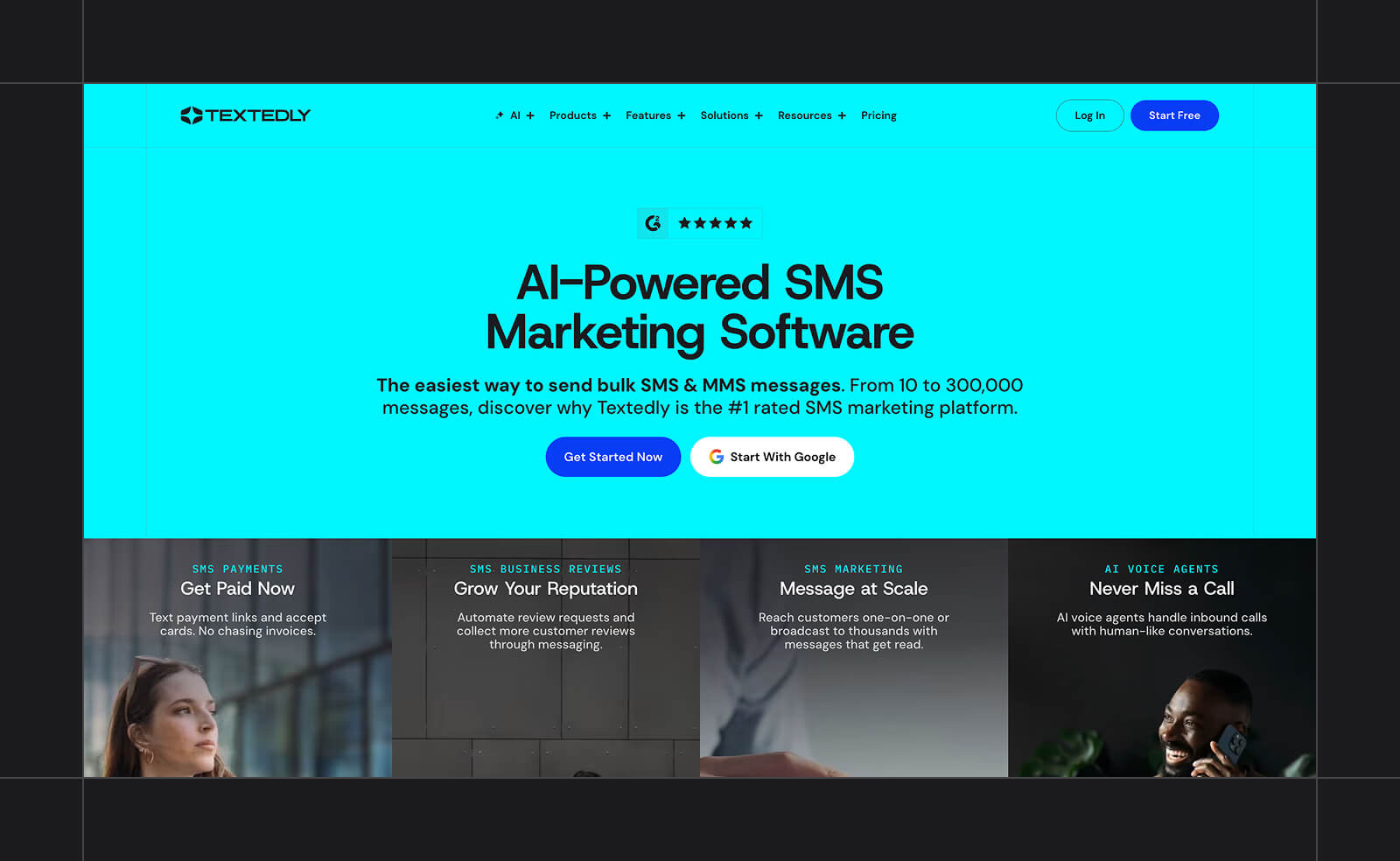
1. Textedly: Best for Full-Feature AI
Key features:
- Textedly’s AI voice and SMS agents answer calls and texts 24/7, qualify leads, and book appointments.
- Every plan includes every feature, from AI agents to Signal AI contact enrichment and Text-to-Pay.
- Built-in carrier compliance covers 10DLC registration, toll-free numbers, and short codes from one account.
Textedly is the best enterprise SMS solution for teams that want AI in every customer conversation, minus the part where someone files a ticket and waits three sprints for engineering to build the agent. The API-first platforms on this list give engineering teams the building blocks to design their own workflows, which suits companies that want full control. But as an AI-powered customer engagement and SMS marketing platform, Textedly ships its agents fully built and ready to switch on from the dashboard.
The AI voice and SMS agents are one of the main reasons to pick Textedly. Businesses using them report up to a 70% reduction in customer service costs and 40% fewer missed after-hours opportunities. Any Textedly number can become an agent that responds in under 400 milliseconds, qualifies leads, schedules appointments, and escalates tricky questions to a person.
Training is about as technical as attaching files to an email; just upload scripts, PDFs, and help center links, and the agent keeps learning. Outbound AI calls can also follow up on SMS campaigns and confirm appointments, and transcripts, recordings, and sentiment analysis let managers check the agent’s work.
The platform also handles the carrier side of enterprise texting. As a Campaign Service Provider, Textedly manages 10DLC registration and covers the fee for your first 10DLC number. It also connects natively or via Zapier with 3,000+ business applications (including Salesforce, HubSpot, Slack, Pipedrive, Shopify, and Mailchimp). Every plan includes 100% of Textedly’s features, so nobody has to climb a pricing ladder just to unlock the good stuff.
Pricing: From $29/month for 500 messages to $5,520/month for 300,000 messages.
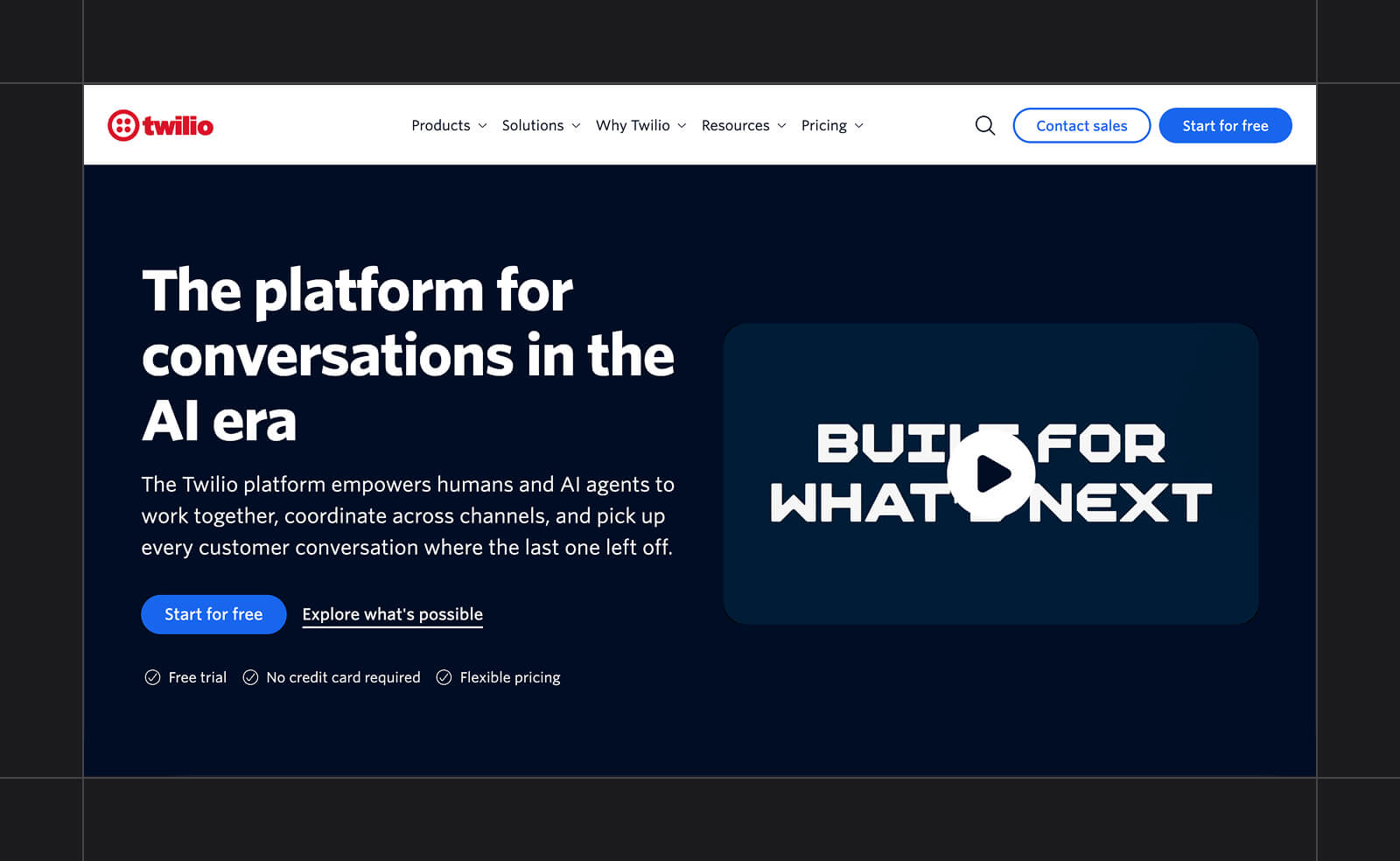
2. Twilio: Best for Developer-Built Messaging
Key features:
- Twilio’s Programmable Messaging API sends SMS, MMS, RCS, and WhatsApp messages to 180+ countries from a single integration.
- Messaging Services pool 10DLC numbers, toll-free numbers, short codes, and alphanumeric sender IDs under shared compliance settings.
- Pay-as-you-go pricing includes automatic volume discounts, plus committed-use discounts for enterprise-scale volumes.
Ask a developer to name an SMS API, and there’s a good chance they’ll say “Twilio” before you finish the question. Twilio earned that reputation by absorbing the messiest parts of carrier messaging, from queuing high-volume sends to keeping up with each country’s rules, so engineering teams can focus on what they’re building.
Twilio’s single integration includes automatic fallback to SMS when a richer message can’t be delivered. Nearly every part of the messaging stack is its own API resource, from managing senders to submitting toll-free verification requests to checking per-country pricing. Developers can run the whole operation from their own code without ever opening a dashboard. Enterprise teams also get SMS pumping fraud prevention and EU data residency for SMS.
The product's flexibility does mean some assembly, and that goes for AI too. ConversationRelay connects voice calls to the large language model of your choice, but your team still has to build the agent around it. Pricing is usage-based, with message rates, carrier fees, phone number leases, and 10DLC onboarding fees itemized separately.
Pricing: Pay-as-you-go from $0.0083 per outbound US SMS segment, plus carrier fees and phone number costs.
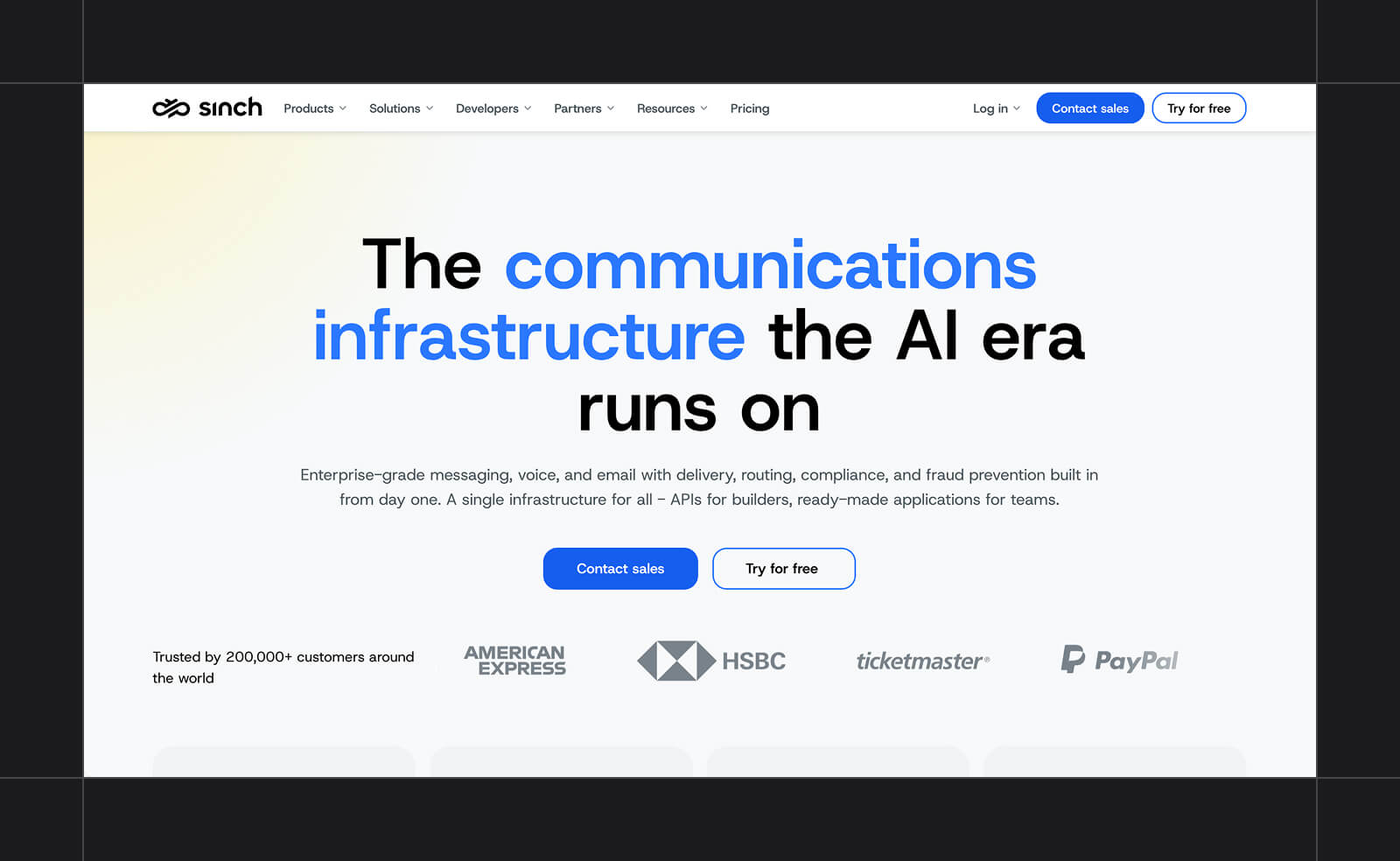
3. Sinch: Best for Global Deliverability
Key features:
- Sinch’s Super Network routes messages over 600+ direct carrier connections to reach 190+ countries.
- One REST API covers short codes, long codes, and toll-free numbers, with real-time delivery reports.
- Sinch’s MCP server connects AI agents to its messaging, voice, and email channels.
You may not have heard of Sinch, but there’s a decent chance your phone has. More than 200,000 businesses send through Sinch, including 8 of the 10 largest tech companies in the world, so the login code you squinted at this morning may well have traveled across its network.
The platform's edge comes from how its messages travel. Instead of passing texts through a chain of intermediaries, Sinch routes traffic straight to the recipient’s carrier. Fewer handoffs mean fewer places for a time-sensitive message to stall, which matters a lot when the text is a one-time passcode or a fraud alert. Sinch backs that network with a 99.95% SMS uptime commitment, ISO 27001 certification, and real-time delivery reports.
Sinch is built with developers in mind, so plan on engineering time to integrate the REST API and set up delivery callbacks. Carrier fees are billed on top of the per-message rate, so it’s worth working with a Sinch account manager to model costs at your volume. If a late passcode means a customer can’t log in, or a fraud alert shows up after the charge already went through, that extra setup is probably worth it.
Pricing: Pay-as-you-go from $0.0078 per US 10DLC message, plus carrier fees.
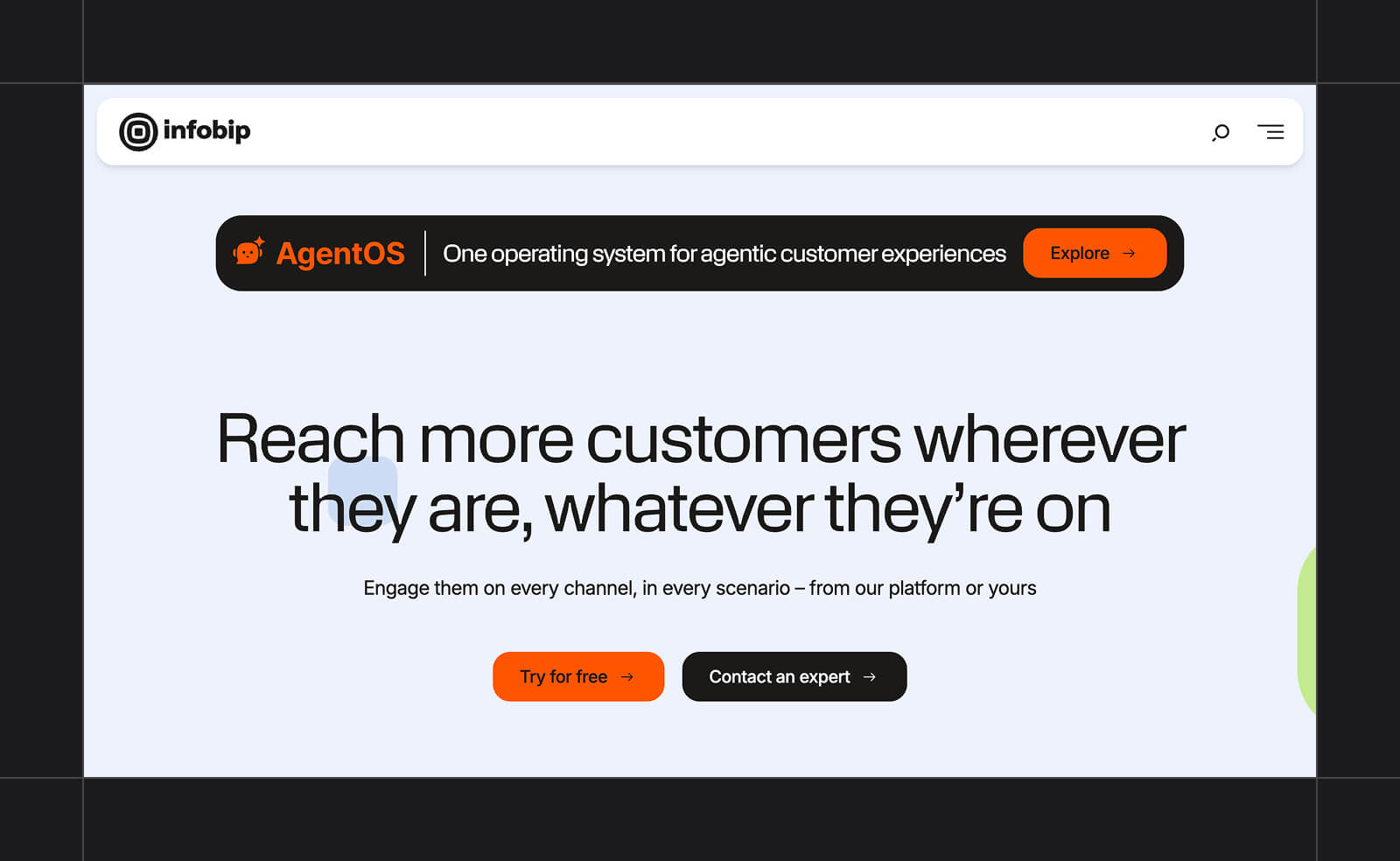
4. Infobip: Best for Omnichannel Customer Journeys
Key features:
- Infobip’s 800+ direct operator connections reach 190+ countries through a single SMS API.
- AgentOS unifies AI agents, campaign automation, human support, and customer data in one platform.
- A native customer data platform gives AI agents and human staff the same customer history in every conversation.
Infobip has been sending business texts since 2006, a full year before the first iPhone showed up. What started as an SMS company now runs its own global operator network, and in 2026 it added an AI layer on top of that foundation.
That AI layer, AgentOS, is a highlight. It brings campaign automation, chatbots, AI agents, a contact center, and a customer data platform together on the same infrastructure that delivers Infobip’s messages. In practice, a customer’s reply to a promotional text can update their profile, kick off a follow-up journey on WhatsApp or email, and route to an AI agent, with a human stepping in when the conversation gets complicated.
Infobip is a big platform, and getting the most out of it usually starts with a conversation with sales. The SMS pricing calculator shows average per-country rates in euros, with exact per-network pricing inside the Infobip Portal. Teams that only need to send texts may find the full suite is more than they’ll use.
Pricing: Pay-as-you-go, priced per message by destination country, with custom plans available.
5. Bird: Best for Low Per-Message Costs
Key features:
- Bird charges one flat US rate across long codes, toll-free numbers, and short codes, with no platform fee.
- Carrier fees and 10DLC registration costs are published line by line on Bird’s pricing pages.
- Idempotency keys make retried sends safe, so a network hiccup doesn’t text a customer twice.
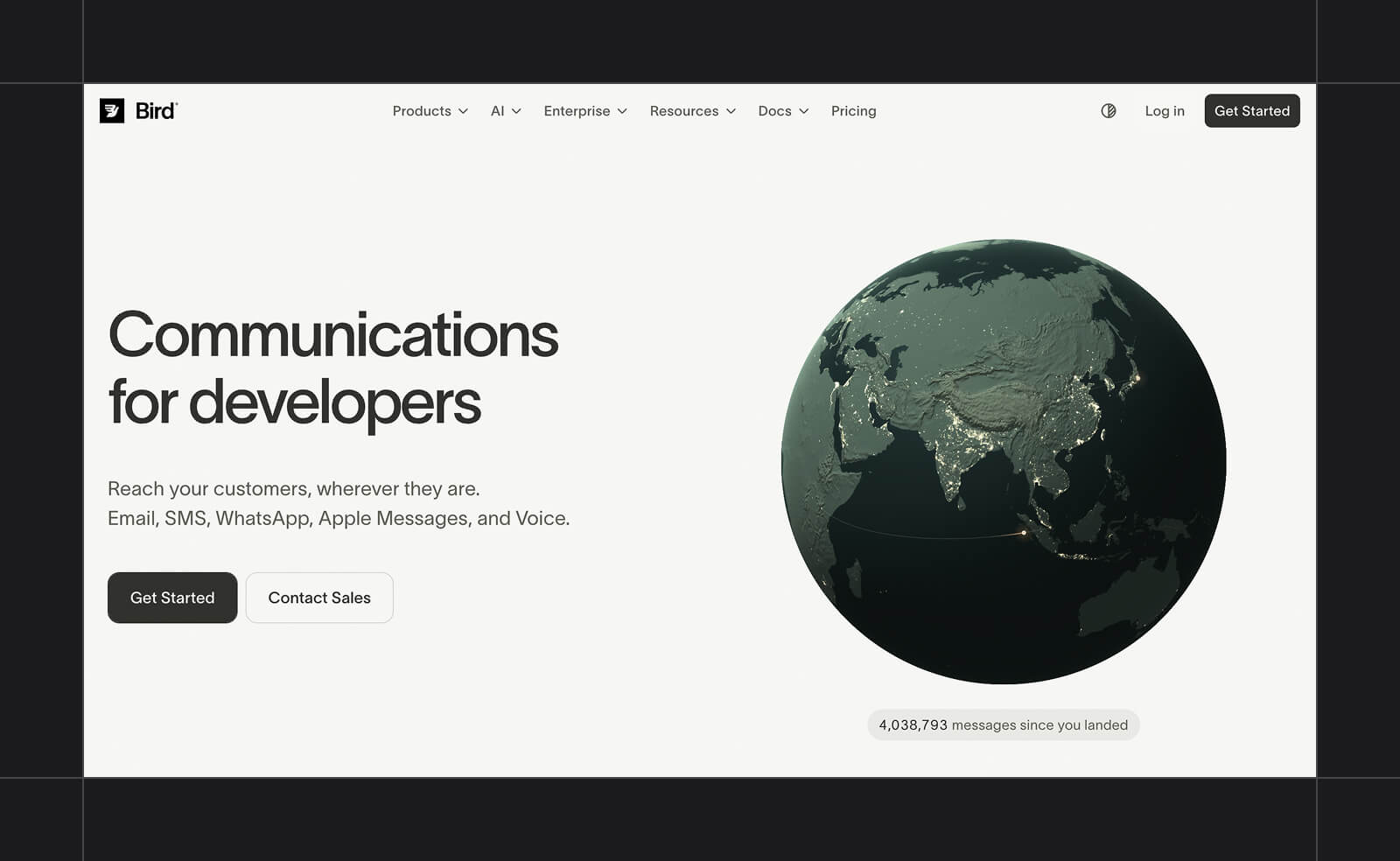
Bird used to be called MessageBird, until someone apparently decided the “Message” part went without saying. The company has been building messaging infrastructure for more than a decade, and its current pitch is pretty simple. It offers one price, one API, and there’s no platform fee to pay before you send your first text.
Bird’s flat US rate is its main draw. Every US message costs the same $0.0073, whether it goes out from a long code, toll-free number, or short code, which comes in below Twilio’s and Sinch’s standard published rates. With every fee published up front, finance teams can model the full bill before anyone hits send.
The platform keeps the developer experience tidy as well. Sending, 10DLC registration, and delivery webhooks share one base URL and API key, and each send can declare whether it’s transactional, marketing, authentication, or service traffic.
Official SDKs cover TypeScript, Python, Go, and PHP, so teams on Java or Ruby will work with the HTTP API directly, and short code programs are set up with a Bird specialist. If you’re sending at high volume and every fraction of a cent shows up on the bill, Bird simplifies the math.
Pricing: Pay-as-you-go from $0.0035 per US message, plus carrier fees.
How to Choose the Right Enterprise SMS Solution
The right product for you depends mostly on who will run it day to day and what you need texting to accomplish. Developer-first APIs give engineering teams total control but expect them to build the workflows; ready-to-use platforms hand marketing and support teams the tools from day one.
Here are some additional considerations:
- For marketing, sales, and support teams: Textedly lets non-technical teams launch campaigns, answer customers around the clock, and stay carrier-compliant without filing an engineering ticket.
- For engineering teams building texting into a product: Twilio offers the most flexibility for developers who want an SMS gateway they can shape around their own systems.
- For messaging across many countries: Sinch is a strong fit when your customers are spread across dozens of countries and you want a direct carrier network to reach them.
- For multi-channel customer journeys: Infobip fits best when SMS is one piece of a bigger experience that also runs through WhatsApp, email, and a contact center.
- For high-volume senders watching costs: Bird keeps per-message rates low with one flat US price and no platform fee.
Choose Textedly as Your Enterprise SMS Provider
Enterprise texting has grown well past sending one message to a big list. Today’s platforms have to clear carrier registration, keep consent records airtight, hold up at high volume, and increasingly carry on real conversations with customers.
Textedly gives teams the most complete version of that checklist. Every plan includes Textedly’s AI voice and SMS agents, Signal AI contact enrichment, Text-to-Pay, and Google review requests. As your Campaign Service Provider, Textedly also handles 10DLC registration and covers the fee for your first 10DLC number. Create your Textedly account to see how the platform fits your team.
Related resources:
- 10 Best Mass Texting Apps in 2026
- AI Voice Agents vs. IVR: Best Answering Service?
- Textedly + OpenAI GPT-4.1
- Textedly vs. Klaviyo SMS: Which SMS Platform Is Right for You?
Related Articles

10 Common SMS Marketing Campaign Mistakes To Avoid

How to Optimize MMS Images for Mobile Marketing Campaigns

How to Use B2B Texting to Boost Sales and Communication

Mobile Marketing 101: Ultimate Guide


Your Customers Are Waiting
Send your first text in minutes—no contracts, no credit card, no hassle.