Best Time to Send SMS Blasts for Max Engagement
KEY TAKEAWAYS
Here’s a snapshot of the main insights to guide your SMS timing strategy and boost message performance:
- Timing drives engagement: SMS campaigns tend to perform best during mid-morning (9 AM – 12 PM) and early evening (5 PM – 9 PM).
- Top-performing days: Thursday, Friday, and Saturday consistently deliver the highest open and response rates.
- Avoid low-activity windows: Mondays, very early mornings, and late nights generally see lower engagement and conversion.
- Adapt to your audience: Consider your industry and customer routines.
- Test and refine: Use A/B testing to identify the most effective days and times for your specific audience, then fine-tune your sending schedule.
Have you ever put in the effort and resources to create a top-notch SMS marketing campaign, only to see it fall flat? Don’t automatically blame the campaign. Texting customers is easy, but knowing the best time to send SMS marketing blasts can greatly influence your digital marketing success.
It's important to realize that business text messages differ from the casual texts we share with friends and family. Even though your customers will most likely read your text, not every moment is ideal for receiving your intended message.
On average, Americans check their phones 352 times per day. In addition, Americans love their devices so much that 65% sleep with their phones at night. Why does timing matter so much? Because timing is everything.
In this article, we’ll share some simple yet powerful tips to help you nail your text messaging campaigns and maximize their effectiveness.
When Is the Best Time to Send Bulk SMS Campaigns?
Spoiler alert: There isn’t a single perfect time to send marketing text messages. While SMS’s phenomenal 98% open rates indicate otherwise, there are better and worse times to send texts.
Everyone responds to marketing text messages differently. For example, some customers may respond well to texts sent early in the morning, while others may be more likely to read them at the end of the day. The ideal send time for your SMS marketing messages will depend on your goals, industry and customer habits.
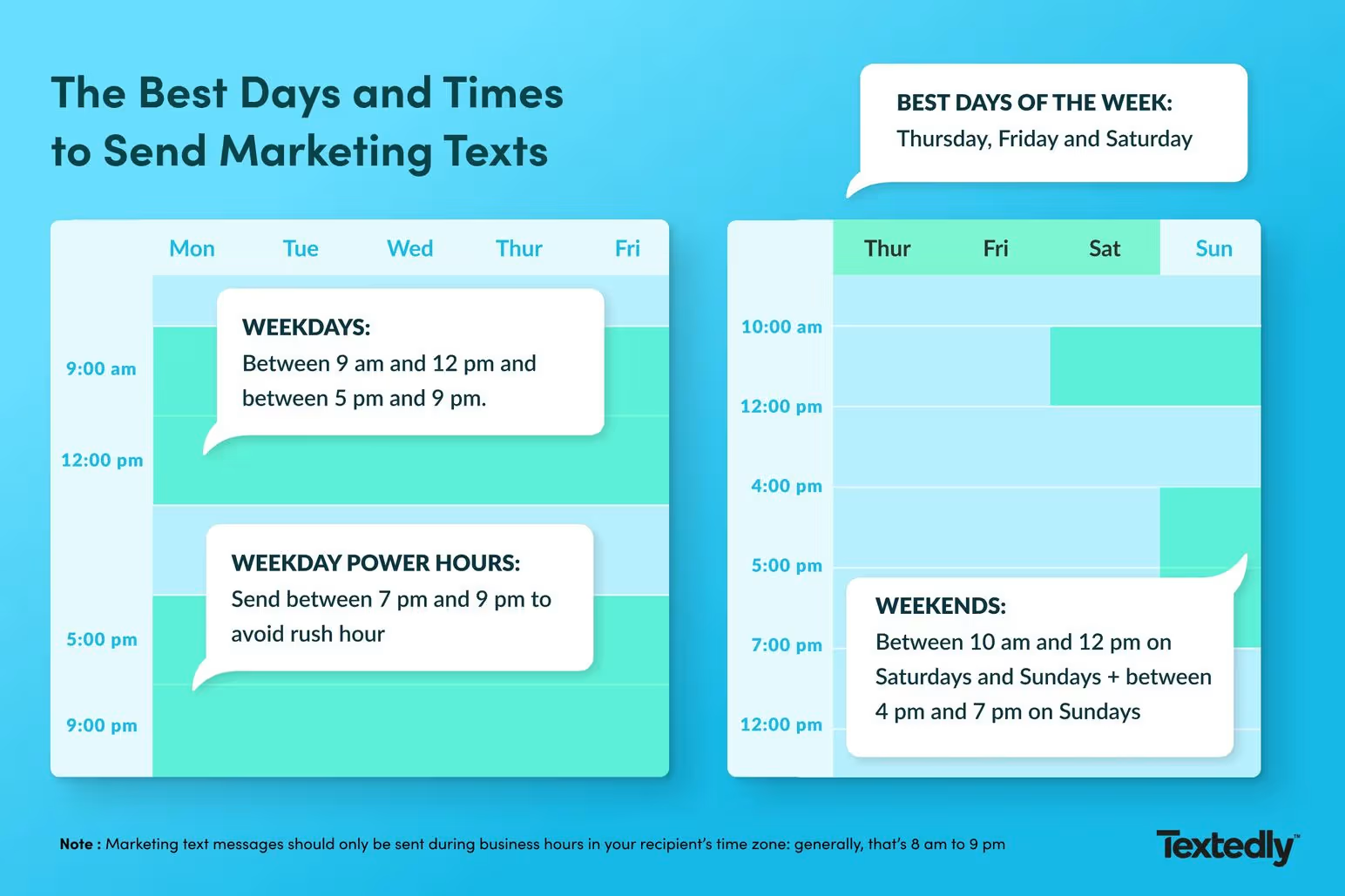
With that in mind, these are generally considered the best times for businesses to send marketing text messages.
- WEEKDAYS: Between 9 a.m. and 12 p.m. and between 5 p.m. and 9 p.m.
- Between 9 a.m. and 12 p.m., people tend to check their notifications and read messages as their workday begins.
- Between 5 p.m. and 9 p.m., many customers have likely ended their workday and will be on their phones.
- Weekday power hours: Send between 7 p.m. and 9 p.m. to avoid rush hour when most people are likely on the road and unable to check their messages.
- WEEKENDS: Between 10 a.m. and 12 p.m. on Saturdays and Sundays, as well as between 4 p.m. and 7 p.m. on Sundays.
- Between 10 a.m. and 12 p.m., people are less likely to be already busy with their weekend plans.
- Between 4 p.m. and 7 p.m. on Sundays, people are more likely to see your text as they are winding down and readying themselves for the week.
- OVERALL BEST DAYS OF THE WEEK: Thursday, Friday and Saturday
- TRANSACTIONAL MESSAGES: Anytime
- PROMOTIONAL MESSAGES: Only during business hours: 8 a.m. to 9 p.m.
When Should You Avoid Sending Text Blasts?
Most people bring their cell phones everywhere and check them constantly. However, there are times when they spend more time on their phones than others. For example, customers may passively check their cell phones throughout the workday but actively check them after work or in the evening.
By reverse engineering the tips above, here’s a handy list of tips on when not to send SMS marketing messages.
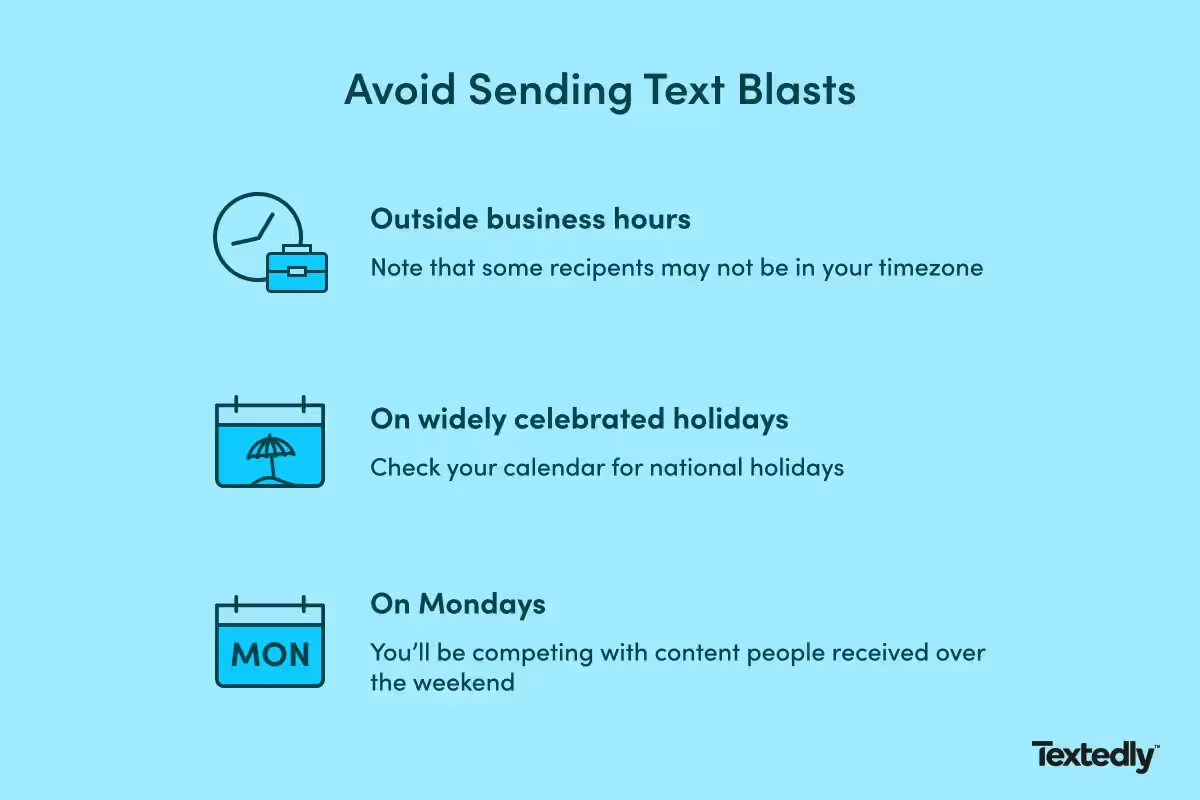
- Outside business hours. Keep time zones in mind when sending bulk SMS campaigns. Texting at 8 am in New York would be a rude (and illegal) wake-up call for Californians.
- On widely celebrated holidays like Thanksgiving, Christmas, New Year’s Day or Easter.
- Mondays, as you’ll be competing with content people receive over the weekend.
Frequency and Cadence
Timing is only half the equation; how often you text matters just as much. Most brands find the best results by sending between four and eight promotional messages per month, enough to stay top of mind without overwhelming subscribers. Sending too often can cause fatigue and higher unsubscribe rates, while texting too rarely makes it easy for customers to forget your brand. Aim for a steady cadence that keeps your audience informed, not inundated, and adjust over time based on engagement trends
Strategies for Effective SMS Campaign Timing
Unlocking the full potential of your SMS campaigns goes beyond sending messages. Get ready to enhance your strategy with insights that make your communication truly effective.
1. Know the Difference Between Promotional and Transactional Messages
When narrowing down an ideal send time, think about the content of your message. Business text messages typically fall into two categories: promotional and transactional.
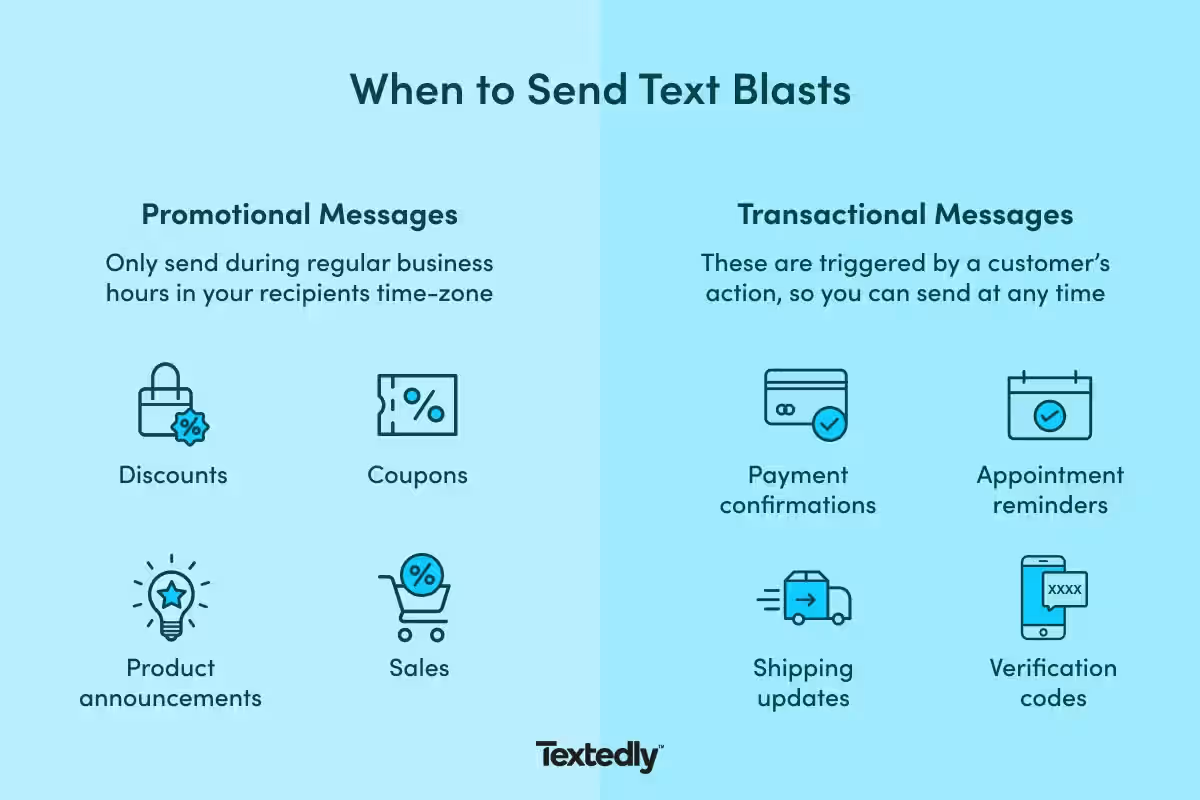
Promotional SMS messages generate sales, promote your product or service or increase brand awareness. Discounts, coupons, sweepstakes and Black Friday sales are common promotional messages.
- Send SMS promotional texts only during regular business hours. Business hours are defined as 8 a.m. to 9 p.m. according to mobile marketing laws set by the TCPA.
- Before sending promotional messages, give your customers enough time to digest the information and take the desired action. For example, alerting customers about a weekend sale on Thursday or Friday (not Saturday morning!) will give them enough notice to act when the sale begins.
Transactional SMS messages contain time-sensitive information required for customers to use your product or service. Transactional text messages include order and payment confirmations, shipping alerts, appointment reminders, and verification codes.
- Unlike promotional texts, you can send transactional texts anytime because a customer’s action usually triggers them.
- Send transactional messages as soon as possible to alert customers of things like account updates and payment confirmations. Waiting too long to send these texts may worry or confuse customers.
Important note: Sending promotional SMS messages requires express written consent from customers. Make sure you gain permission before sending a promotional text to comply with TCPA regulations.
2. Adopt a Personalized Texting Approach
Ok, so maybe it’s not all about the time of day. A 2020 study conducted by ResearchGate found that personalized repurchasing reminders (vs. reminders sent at fixed time intervals) were more effective at engaging customers and getting them to repurchase.
Using a personalized scheduling method (1, 2, 12, and 24 hours after sending the initial text) led to much better customer interactions and conversions:
- A clear rise in the percentage of customers who engaged with the message once they received it (up to 17.5% higher) was observed.
- Additionally, there was an increase in the percentage of customers who made a repurchase (up to 12.5% higher).
3. Conduct A/B Tests to Determine Optimal Timing
Conduct tests to determine which days of the week and times of day get the best responses from your audience.
Spread your text campaign across a few days and record metrics like open and response rates. This strategy will allow you to determine which days work best for your audience. Here's how to conduct an A/B test:
Define Variables: Determine the specific aspect of your texting strategy that you want to test, such as the time of day, day of the week, or frequency of messages. Make sure to change and test only one thing at a time. This way, you can be sure that any difference you notice is because of the change you made.
Segment Your Audience: Divide your audience into two or more groups, ensuring that each group is representative of your target demographic.
Test Timing Variations: Send identical text messages to each group at different times or days. For example, Group A may receive messages in the morning, while Group B receives messages in the evening.
Pro Tip: Once you’ve tested broad time windows, explore micro-timing. Instead of sending exactly on the hour (like 10:00 a.m.), try odd-minute send times such as 10:18 a.m. or 10:42 a.m. Messages sent at non-standard minutes often avoid the “send surge” when many brands push campaigns simultaneously.
You can also test calendar-day timing — the first, middle, or last days of the month. Engagement often fluctuates around pay cycles or workload patterns. For instance, ecommerce audiences might respond better right after payday, while B2B recipients tend to engage mid-month when inbox volume is lighter.
Monitor and Analyze Results: Track key metrics such as each group's open rates, click-through rates, and conversion rates. Compare the performance of different timing variations to determine which schedule yields the highest engagement and desired outcomes.
Iterate and Refine: Based on the results of your A/B test, adjust your texting schedule accordingly. Continue to refine your approach over time based on ongoing testing and analysis.
To make your A/B testing process more organized, outline your experiments in a weekly plan. The example below shows how to structure tests by time, day, message type, and frequency to identify the most effective timing for your audience.
Pro Tip: Timing doesn’t have to rely on guesswork. With Textedly, you can schedule messages, automate recurring campaigns, and segment your audience by time zone or behavior. Test delivery windows for each group and use analytics to identify their “sweet spot.” Once you find it, schedule recurring sends for consistent engagement.
What to Consider when Choosing a Time
Research indicates that the best time to send an SMS message varies depending on factors such as the target audience, the purpose of the message, and even the day of the week. Understanding these nuances can significantly impact the effectiveness of your communication strategy.
1. Your Audience
When deciding on the optimal time to send an SMS message, it's essential to consider the demographics and behaviors of your target audience. For instance, if you're targeting working professionals, sending messages during typical office hours might not yield the best results, as they are likely busy with work responsibilities. Conversely, if your audience consists of college students, evenings and weekends might be more conducive to engagement.
2. Your Recipients’ Time Zones
If your audience spans different time zones, it's crucial to tailor your messaging strategy accordingly. Sending messages during peak hours in each time zone ensures that recipients are more likely to see and respond to your texts when they're most active.
3. Your Industry
Different industries have unique customer behaviors and preferences. You can maximize engagement and drive results by aligning your texting schedule with your target audience's specific needs and habits. Here's how various industries can benefit from customized texting schedules:
Different message types require different timing:
- Flash sales or limited offers work best a few hours before they start.
- Reminders or confirmations should go out 24–48 hours in advance, with a quick follow-up shortly before the event.
- Event promotions perform well 2–5 days before the date, plus one day-of reminder.
- New product announcements land better mid-day, mid-week.
- Re-engagement campaigns tend to work best during evening downtime.
Pro Tip: Align your send times with both your industry and the purpose of your message. Combining these two factors ensures your texts reach people at the moments they’re most likely to notice, engage, and take action.
Restaurants and Food Service
Timing is everything for restaurants, cafes, and other food service establishments. Sending out text messages shortly before mealtimes can entice hungry customers to dine in or place an order for delivery or pickup.
Retail Stores and Ecommerce Businesses
Retailers and ecommerce businesses may find that their customers are most receptive to text messages during certain times of the day, such as early morning or late evening, when they have downtime to browse and shop.
Fitness and Wellness Centers
Leverage texting to remind clients of upcoming classes, appointments, or special events. Sending out texts during off-peak hours, such as late afternoon or early evening, can prompt individuals to plan their workouts or self-care routines for the upcoming day or week.
Entertainment and Events
Entertainment venues, such as theaters, concert halls, and sports arenas, can benefit from texting schedules that coincide with ticket sale launches, pre-event reminders, or last-minute promotions.
Nail Your SMS Campaign Timing With Textedly
Mastering the art of timing in your SMS campaigns is the key to unlocking higher engagement and conversion rates. And the good news is you don't have to navigate this journey alone.
Textedly is the ultimate partner in optimizing your SMS marketing game. Textedly gives you the tools to reach your target audience at the perfect time. With features like text message scheduling and unlimited subscribers, you’ll have all the resources you need to connect with your customers.
Ready to take your SMS campaigns to the next level? Elevate your text messaging strategy and discover the true potential of well-timed communication in driving your business forward.
Sign up for a free Textedly trial and schedule your first SMS marketing campaign today!
Related Articles


Your Customers Are Waiting
Send your first text in minutes—no contracts, no credit card, no hassle.